How People Become Volunteers at Cheyne Ranch

We get quite a few messages from people who love horses and would like to volunteer at Cheyne Ranch.
I understand why. There is something very appealing about spending a few hours at a barn, being around horses, doing useful work, and going home tired and dirty. There is certainly no shortage of work here either. There are stalls to clean, buckets to scrub, water troughs to fill, tack to organize, animals to feed, and something somewhere that needs sweeping almost all the time.
For a long time, I wondered if we should make it easier for new people to come volunteer. I pictured holding an orientation every so often, teaching the basic safety rules, showing people where things are, and giving them a list of jobs.
Then I started noticing that the people who were most helpful here had something in common. They knew Cheyne Ranch.
They knew which gate needed to be closed before another one opened, where things belonged, which horse needed a little extra space, and when someone nearby could use another set of hands. They understood the rhythms of the place well enough to notice what needed doing.
That kind of awareness takes time.
Most of Our Helpers Start as Students
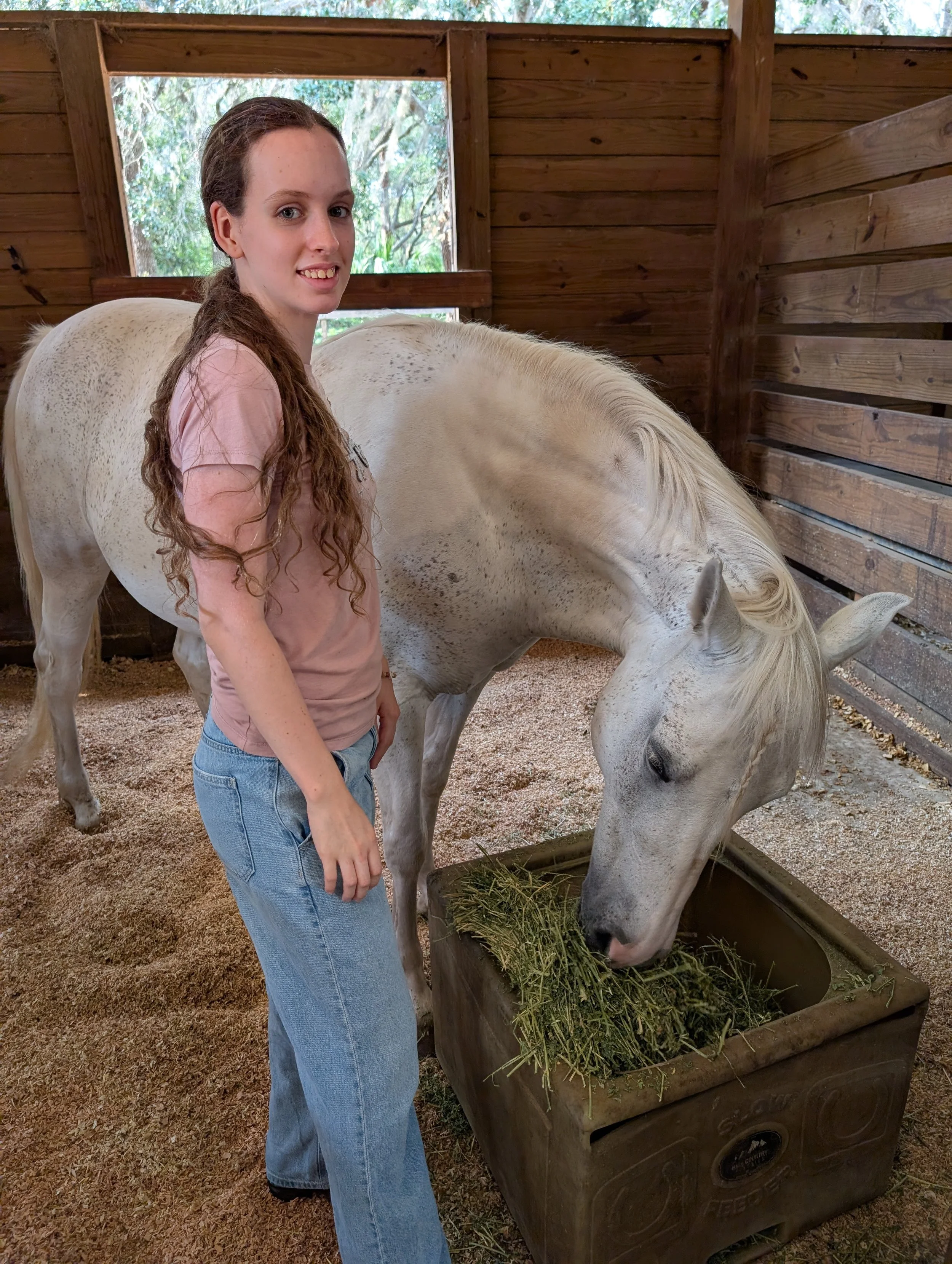
Our volunteers almost always begin as students in one of our programs.
That gives them time to learn the horses, the animals, the property, our routines, and the way we approach safety. It also gives us time to teach the skills that matter here beyond basic horse care.
We teach them what to do when a horse does something unexpected, how to listen to correction and try again, how to finish the job they started, how to ask for help, and how to gradually take responsibility for more.
At first, a student may need someone beside them for almost everything. Over time, they begin to understand how we do things here, and for some students the next natural step is helping.
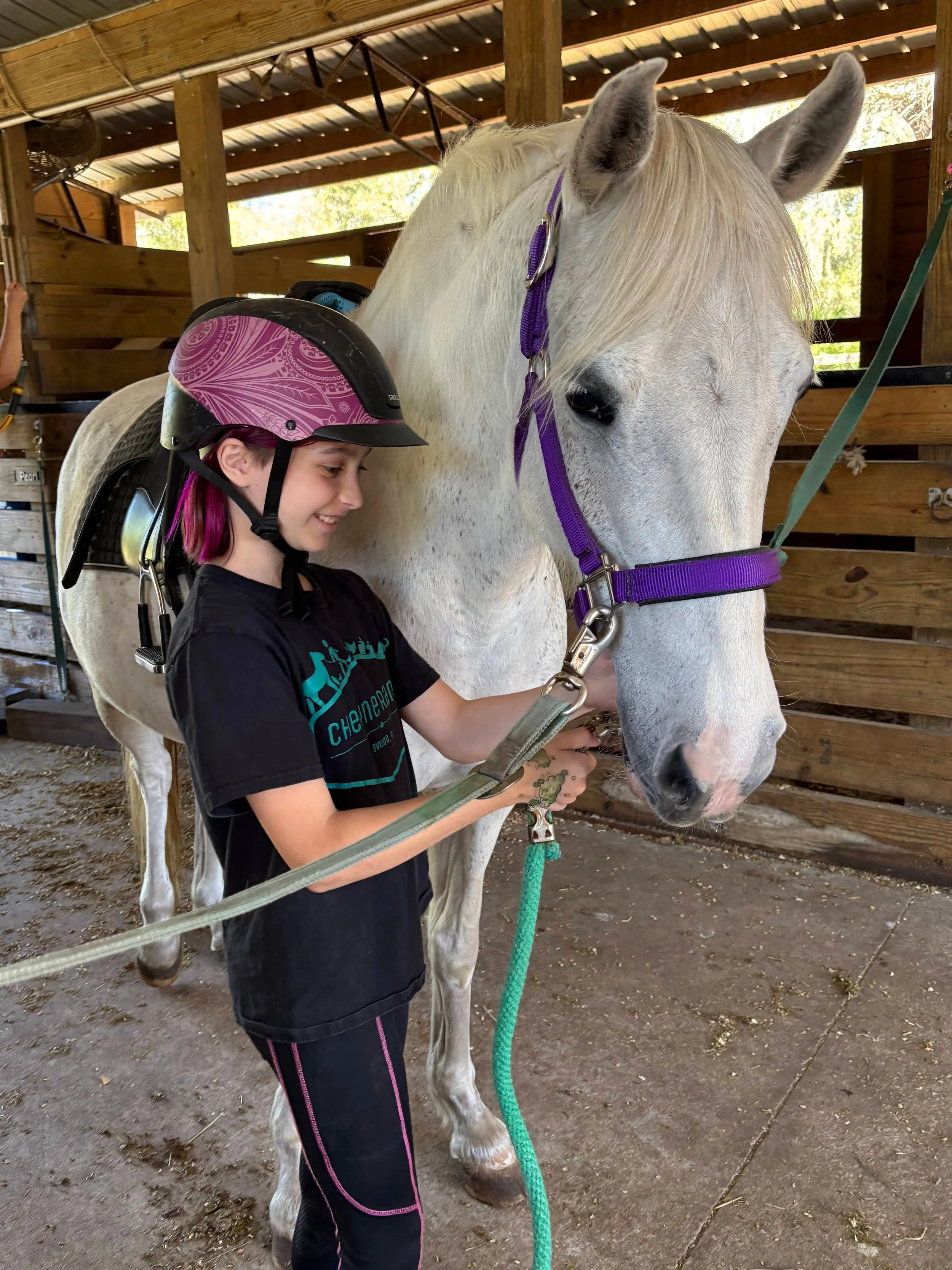
They may start by cleaning a stall independently, helping a younger student groom a horse, setting up an activity, or putting an area back together after a program. Eventually, some of them become the person showing someone else how to do something they once needed help learning themselves.
I love watching that happen.
Teaching People How to Work
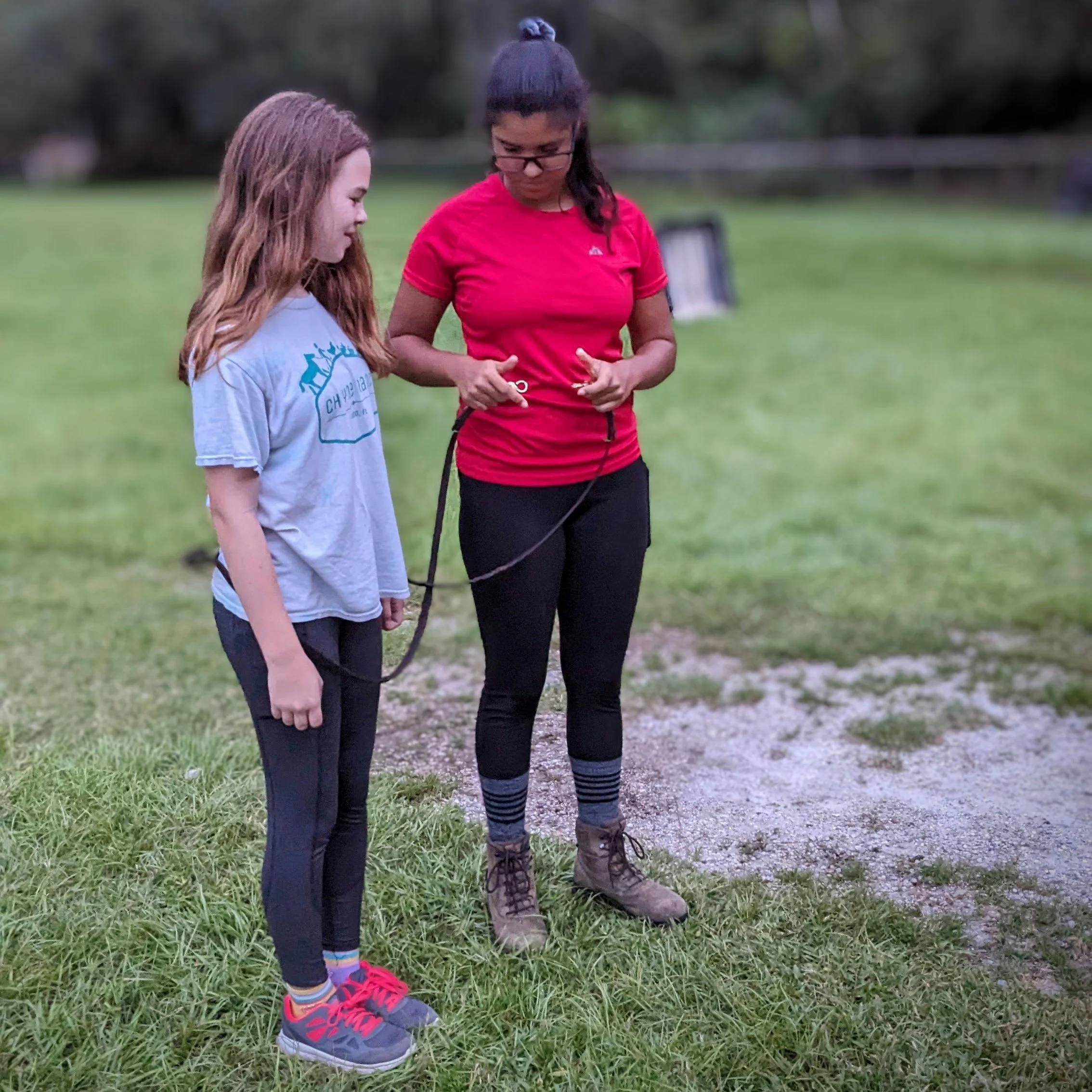
A lot of what we do here is teaching people how to work.
Through caring for horses, people learn much more than horse care. We teach people how to show up, how to be trusted with something that matters, how to be corrected and try again, how to see a job through, and how to notice what needs doing before someone asks.
For teenagers, that can grow into confidence and competence. For adults with special needs, it can become real work with real responsibility in a place where the work is genuinely needed and they are genuinely capable of doing it.
The work is part of the teaching.
What Grows Around the Work
Some of the most meaningful things happening here are harder to put on a task list.
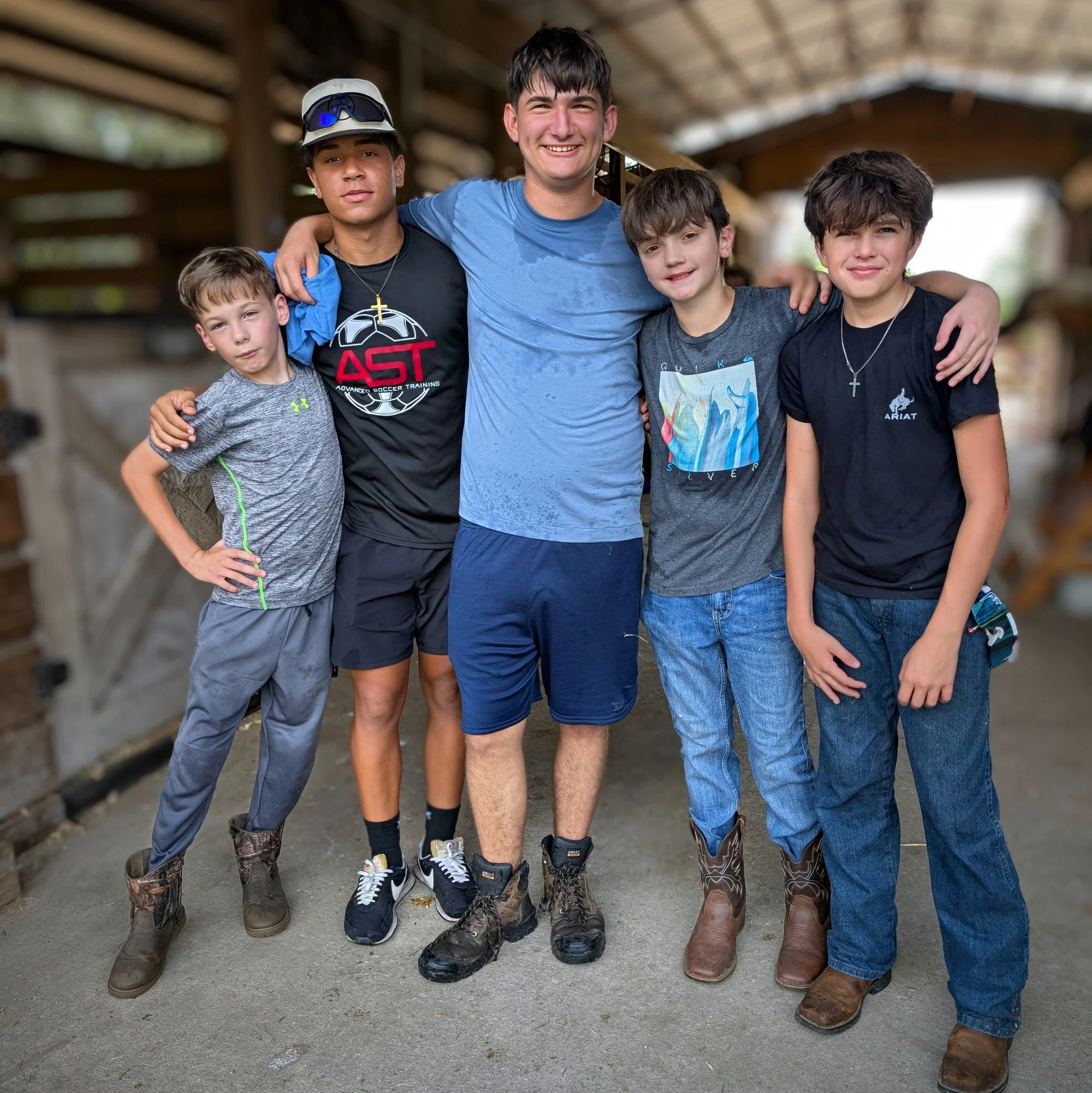
People know one another well. They notice when someone is having a hard day, who needs a little more patience, who needs encouragement, who can handle a job independently, and who still needs someone nearby.
A lot of that grows during very ordinary hours together. They talk while they clean stalls, catch horses, drag hoses around, put away tack, share snacks, and clean up after programs. Over time, those ordinary hours turn into trust.
Some of the people who started here as students years ago are now deeply woven into this place. Families know them, younger students look up to them, staff trust them, and they know one another in the way people do when they have spent a lot of time working side by side.
That sense of being known is one of the things I value most about Cheyne Ranch. People have room to grow here while still being accepted where they are. They can be corrected, encouraged, trusted with more when they are ready, and supported when they still need help.
Over time, they also learn how to offer that same kind of care to the people around them.
How People Come Into It
Our regular helpers become part of Cheyne Ranch gradually. They learn the horses, the systems, the people, and the expectations, and we learn them too.
That is not a screening process to see who is good enough. It is how the skills get built.
So if volunteering here sounds like something you or your child might eventually be interested in, the first step is to come as a student. This is not only for kids. Our PALS program serves adults with special needs, and several of our most trusted helpers came to us that way.
The best place to start is with a family visit so we can meet each other, show you around, and help you figure out which program may be the best fit.
When a Group Wants to Help
Now and then we take on a specific project with an established group, and those days are some of my favorites.
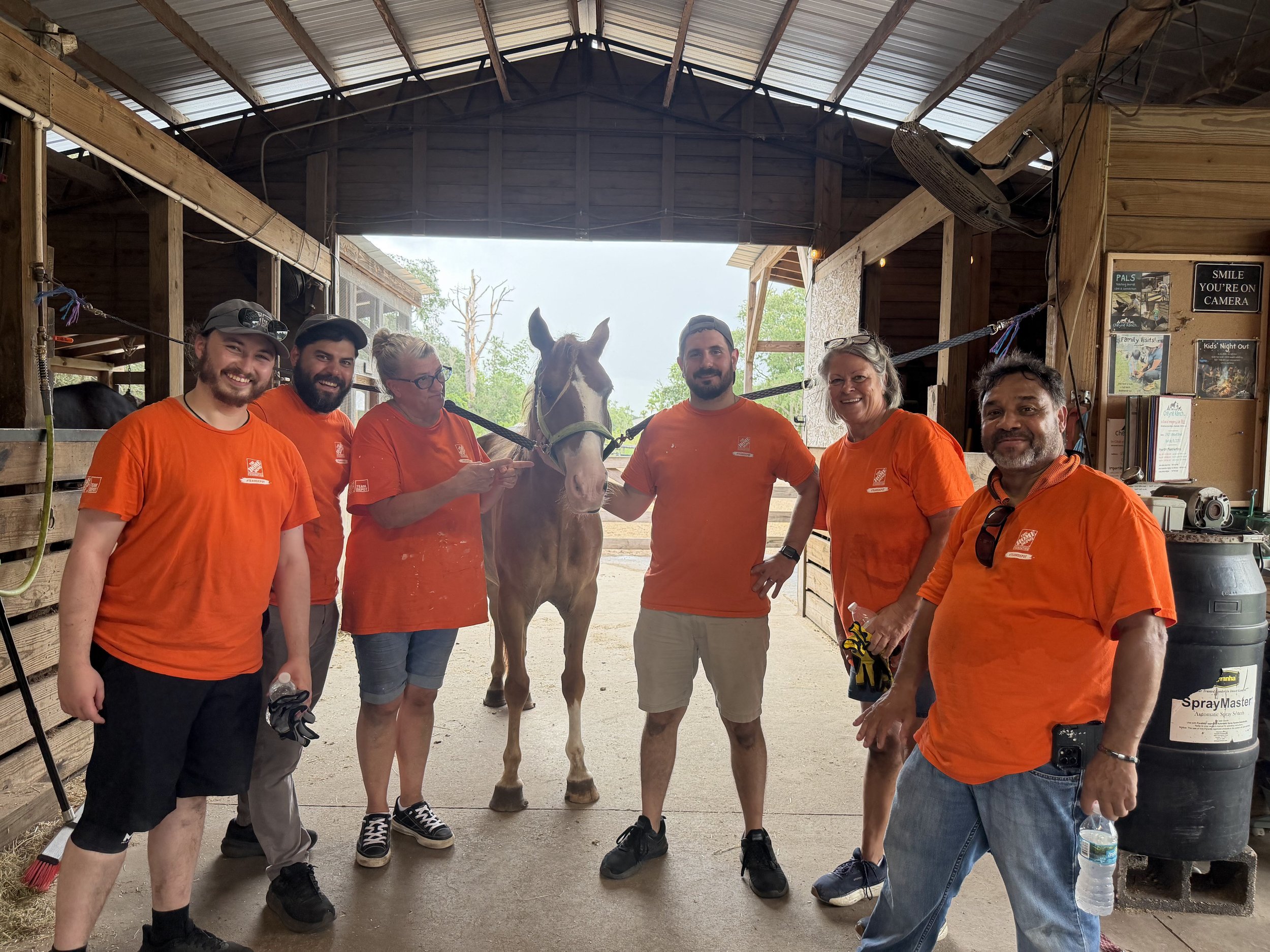
The Home Depot Foundation and Team Depot from the Oviedo store came out to build arena fencing, paint ground poles, repair fence areas, and help us clean up and organize around the barn. It was a wonderful day, and I am proud of that relationship.
Project days like that work differently from our regular volunteer pathway. A group arrives around one clearly defined job, we are all out there together, and the whole thing has a beginning and an end.
We are always glad to hear from 4-H clubs, businesses, civic groups, and other organizations that would like to help with a project when the right opportunity comes along.
The stalls still get cleaned, the buckets still get filled, and the barn still gets swept. But over the years, I have come to see that our volunteer program is doing something much bigger than helping us get the work done.
It gives people a place to learn how to contribute, grow into real responsibility, and become known and trusted within a community where people care about one another.